Business solar panels: a complete guide to commercial solar energy solutions
For many UK businesses, electricity has become one of the most unpredictable lines on the balance sheet. Warehouses, offices, farms, retail units and manufacturing sites all depend on power, yet the price of that power can shift beneath their feet.
Business solar panels offer a practical way to take back some control. By generating clean electricity on-site, a company can reduce its reliance on the grid, lower operating costs and make visible progress towards its environmental goals. The roof above your business may be more than weather protection; it could be an underused energy asset.
Commercial solar energy is not a one-size-fits-all purchase, however. The right system depends on your building, electricity use, budget and future plans. This guide explains how business solar panels work, what they cost, what savings to expect and how to choose a system that earns its place on your premises.
What are business solar panels?
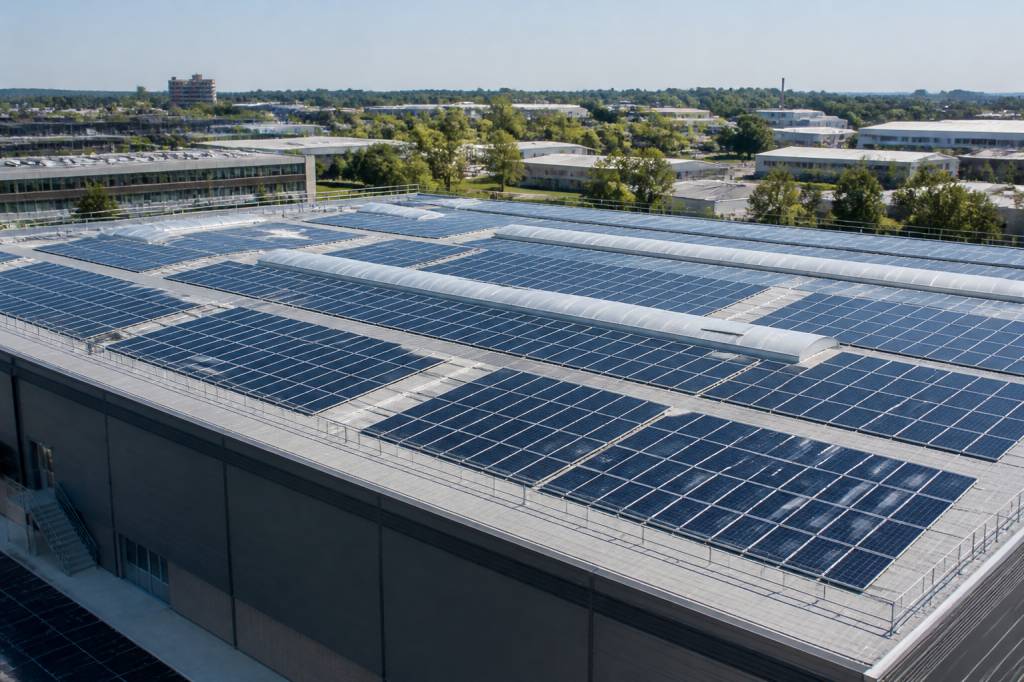
Business solar panels are photovoltaic (PV) modules installed on commercial or industrial properties to convert sunlight into electricity. The panels produce direct current (DC), which an inverter changes into alternating current (AC) for use by standard equipment, lighting and appliances.
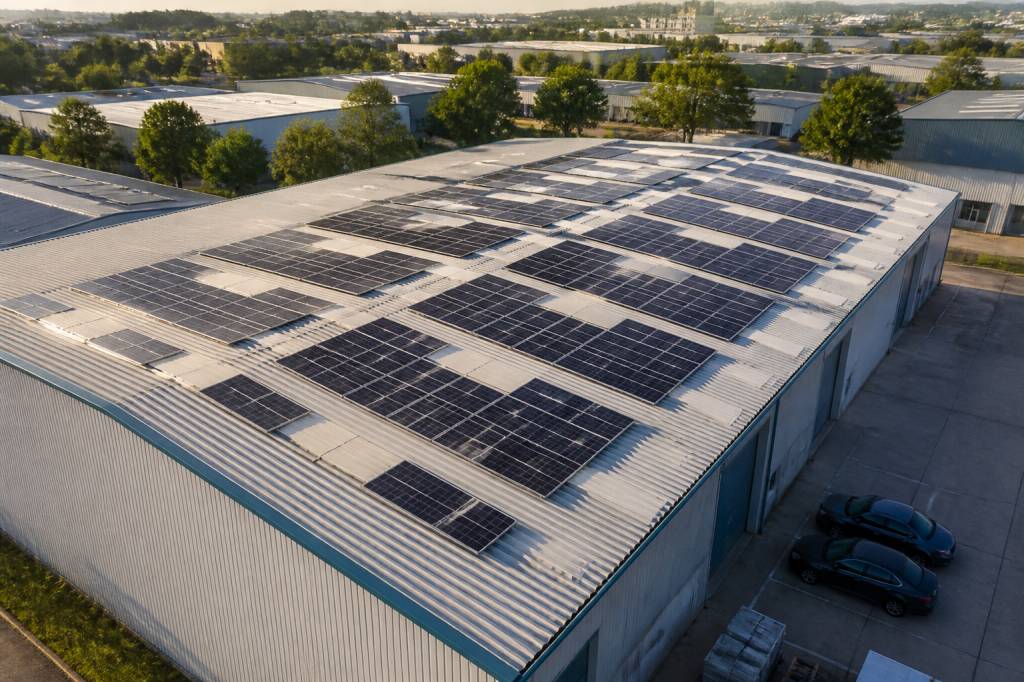
A commercial solar installation can be fitted to many types of property, including:
The electricity generated is normally used on-site first. If the panels produce more power than the business needs at a particular moment, the surplus may be exported to the grid or stored in a battery.
This distinction matters. A business that consumes most of its electricity during daylight hours may benefit particularly well from solar PV, because it can use the energy as it is generated rather than buying electricity from the grid.
How a commercial solar system works
The basic process is straightforward. Solar cells inside each panel respond to daylight and generate electrical energy. The inverter then converts this energy into a form your building can use.
A typical system includes:
In the UK, panels do not need bright sunshine to work. They generate electricity from daylight, although output is naturally higher in summer and lower during shorter winter days. Think of the panels as quiet workers: they may be less energetic in December, but they rarely take a completely cold day off.
Why businesses are investing in solar energy
The most immediate attraction is usually financial. Generating electricity on-site can reduce the amount a business buys from its supplier. For organisations with large roofs and consistent daytime consumption, the savings can be meaningful over many years.
There are several additional benefits:
I have seen businesses approach solar initially as a way to cut bills, only to discover that the system also becomes a useful part of their brand story. Customers may not inspect the inverter room, but they notice solar canopies, sustainability messaging and a company that is prepared to invest for the long term.
Assessing whether your business is suitable
A professional installer should carry out a detailed survey before recommending a system. You can begin by reviewing a few key points yourself.
Roof condition and structure: Solar panels can last 25 years or more, so the roof should be capable of supporting them for the expected lifespan. If a roof needs replacement soon, it is usually sensible to address that work before installing panels.
Available space: The usable roof area is not always the same as the total roof area. Skylights, roof vents, plant equipment, access routes and safety margins all affect the final layout.
Orientation and shading: South-facing roofs are often productive, but east- and west-facing roofs can also perform well. Nearby buildings, trees, chimneys and roof structures may create shading that reduces output.
Electricity consumption: Examine at least 12 months of bills if possible. Look at annual usage, peak demand, seasonal changes and the times when your building consumes the most power.
Grid connection: Larger installations may require approval from the local Distribution Network Operator. The grid connection process can affect both the timetable and the total project cost.
Planning and permissions: Many rooftop systems benefit from permitted development rights, but restrictions can apply, particularly in conservation areas, listed buildings or locations with specific planning conditions. Your installer should identify the relevant requirements rather than treating them as a footnote.
Choosing the right system size
It can be tempting to fill every available roof space with panels. More panels mean more generation, but the largest possible system is not automatically the most financially effective.
The ideal size should reflect your electricity demand, export arrangements, budget and future plans. A business that operates machinery throughout the day may be able to use a high proportion of its solar generation on-site. An office that closes at 5pm may produce more surplus electricity during weekends and holidays.
Ask your installer to model different scenarios, including:
Commercial solar design is a little like tailoring a suit. The fabric may be excellent, but the fit determines whether it performs properly.
Solar batteries for commercial properties
Solar panels generate electricity during daylight, while many businesses also need power in the early morning, evening or overnight. A battery can store surplus energy and release it when demand rises.
Battery storage may be useful for businesses that:
It is important to understand that a battery is not automatically a good investment in every project. Its value depends on your consumption profile, electricity tariff, battery capacity, usable depth of discharge and expected operating pattern. A reliable installer should show how the battery affects the financial model rather than presenting it as a compulsory extra.
Some commercial batteries can also support energy management by charging when electricity is cheaper and discharging when prices are higher. This requires suitable controls and a tariff that makes the arrangement worthwhile.
Understanding costs and financial returns
The price of a business solar installation varies considerably. A small office system may cost far less than a large warehouse project with high-capacity inverters, reinforcement work, complex access arrangements and grid upgrades.
Factors affecting the cost include:
To judge the potential return, compare the total project cost with the value of the electricity generated and used. The calculation should account for self-consumption, exported electricity, maintenance, finance costs and expected changes in energy prices.
Useful financial measures include:
Businesses may purchase a system outright, use commercial finance or explore arrangements such as power purchase agreements. Each option has different implications for ownership, cash flow, maintenance and accounting. Speak with an accountant or financial adviser before committing to a structure, particularly where tax treatment is important.
Exporting surplus electricity
When solar generation exceeds on-site demand and the battery is full, surplus electricity can potentially be exported to the grid. The payment received depends on your supplier, contract and export arrangement.
Export income should be treated as a useful addition, not the sole foundation of the business case. In many commercial projects, using solar electricity on-site provides greater value than exporting it, because the avoided purchase price is often higher than the export rate.
Your installer or energy consultant should explain the likely balance between self-consumption and export. Smart metering and accurate monitoring make this process easier to track.
Maintenance and expected lifespan
Solar PV systems have relatively modest maintenance requirements, but they are not completely maintenance-free. Panels generally have no moving parts, which helps keep routine servicing simple. Inverters may require attention sooner than the panels, as they perform more complex electrical work.
A sensible maintenance plan can include:
Modern panels are commonly designed to operate for 25 years or more, although their output gradually decreases over time. Ask for clear warranties covering both product quality and performance, and check who will handle warranty claims if something goes wrong.
How to choose a commercial solar installer
Price matters, but it should not be the only deciding factor. A low quotation can become expensive if it overlooks roof condition, access, electrical capacity or future energy needs.
Before signing a contract, ask:
Look for transparent proposals rather than impressive promises. A trustworthy installer will explain limitations as clearly as benefits. Solar should be a long-term partnership, not a hurried transaction decorated with a few green leaves.
Practical steps before you begin
Start by collecting your electricity bills, half-hourly data if available, roof plans and information about future changes to the premises. Consider whether you may add electric vehicle chargers, heat pumps, refrigeration or new machinery. These future loads can significantly improve the value of a solar system.
Then arrange an independent site assessment and request more than one detailed quotation. Compare projected generation, self-consumption, export assumptions, equipment specifications, warranties and total costs—not simply the number at the bottom of the page.
Business solar panels are a substantial investment, but they can also be a practical foundation for a cleaner and more resilient operation. With careful design, realistic figures and proper installation, the unused space above your business can begin working as hard as the people below it.