Solar Panel Warranties and Lifespan: What UK Homeowners Need to Know
Understanding Solar Panel Warranties and Lifespan for UK Homes
Installing solar panels is a long-term investment, and for UK homeowners the warranty and lifespan of a solar PV system are just as important as the upfront cost or the projected energy savings. Yet warranty documents are often dense, full of technical terms, and not always tailored to real-life conditions in the UK’s climate.
This guide explains how solar panel warranties work, what “25 years” really means in practice, and how long you can expect your solar panels and inverters to last on a typical British roof. It also highlights key questions to ask installers before you sign a contract, helping you make a more informed decision and avoid unpleasant surprises later.
Types of Solar Panel Warranties: Product vs Performance
When you see a panel advertised with a “25-year warranty”, it usually refers to more than one type of protection. In the UK solar market, most homeowners will encounter two main warranties for solar panels: the product warranty and the performance warranty.
1. Solar panel product warranty
The product warranty, sometimes called the “materials and workmanship” warranty, covers defects in the physical panel itself. This includes issues like:
- Manufacturing defects that cause early failure
- Problems with the glass, frame, or junction box
- Delamination or water ingress due to poor sealing
- Hot spots caused by faulty cells or connections
Most modern solar panels in the UK come with a product warranty of 10 to 15 years, but premium brands increasingly offer 20 to 25 years. A longer product warranty is a strong indicator that the manufacturer trusts the durability of their modules in real-world conditions.
2. Solar panel performance warranty
The performance warranty is different. It does not guarantee that the panel will be free of defects. Instead, it promises that the panel will still produce a certain percentage of its original power after a defined period. A typical performance warranty might state:
- At least 90% of the rated output after 10 years
- At least 80–84% of the rated output after 25 years
This reflects the natural degradation of solar panels over time. Even high-quality panels gradually lose efficiency each year, usually in the range of 0.25–0.7% per year. The performance warranty sets a maximum acceptable level of this decline.
For UK homeowners, the key is to understand that a 25-year performance warranty does not mean your panels will work perfectly for 25 years. It means they are expected to keep delivering a substantial portion of their original output within defined limits of power loss.
How Long Do Solar Panels Actually Last in the UK?
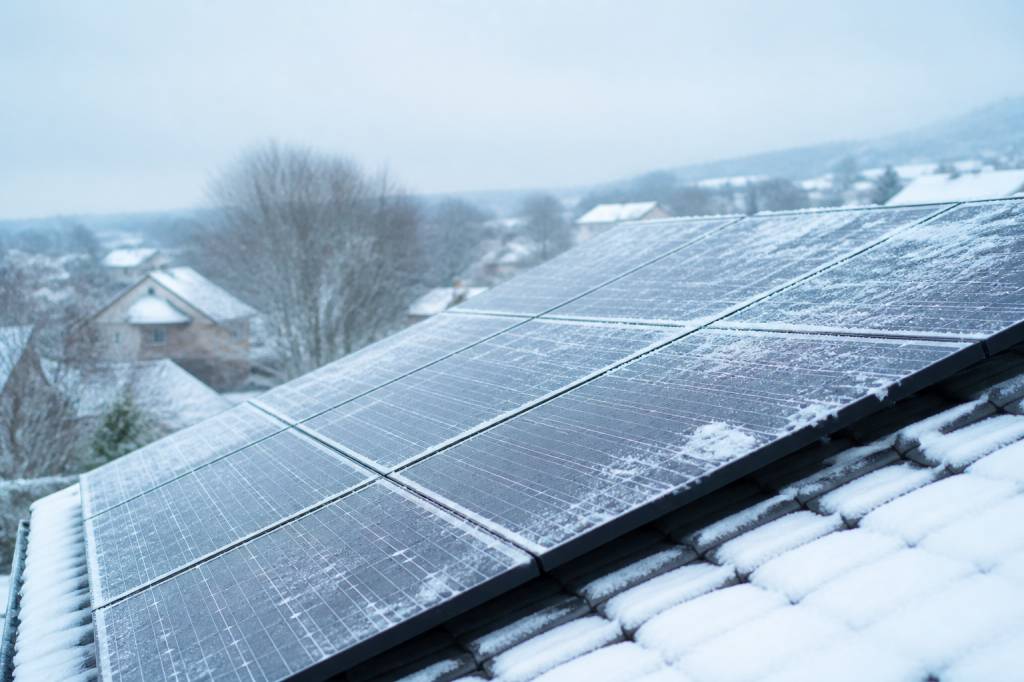
The UK’s mild, temperate climate is generally favourable for the lifespan of solar panels. Unlike some hotter regions, British roofs are less exposed to extreme heat that can accelerate degradation. On the other hand, high winds, heavy rain, salt air near the coast, and occasional snow loads all place mechanical stress on a system.
Typical solar panel lifespan
With quality installation and reputable brands, most UK homeowners can expect their solar panels to last at least 25 to 30 years, and often longer. Panels do not simply stop working at the end of the warranty period; they typically continue producing electricity, just at a lower output than when new.
After 25 years, many systems still operate at 75–85% of their original capacity, depending on the manufacturer and model. For a 4 kW system, that might mean you effectively have 3–3.4 kW of usable capacity after two and a half decades.
Factors that influence solar panel lifespan in the UK
- Quality of the modules – Tier 1 manufacturers and panels with longer product warranties usually have stricter quality control and more robust materials.
- Mounting and installation quality – Poorly fixed rails, inadequate roof flashings, or incorrect cable management can lead to water ingress, mechanical damage, or electrical faults.
- Local climate conditions – Coastal properties face more salt corrosion, while exposed rural sites may experience higher wind loads and more debris impact.
- Maintenance and inspections – Occasional visual checks and professional inspections can identify issues like loose connectors, shading from new trees, or cracked glass early.
In practice, many of the earliest solar PV systems installed in Europe in the 1990s are still operating today, providing real-world evidence that panels can outlast their original warranties.
Solar Inverter Warranties and Lifespan
While solar panels tend to be extremely reliable, the solar inverter is more likely to need replacement during the lifetime of the system. Inverters convert the DC electricity from your panels into AC electricity for your home and the grid, and they contain more electronic components that are sensitive to heat and wear.
Typical inverter warranty in the UK
For UK residential systems, most string inverters come with a standard warranty of 5 to 10 years. Many manufacturers offer extended warranties up to 15 or even 20 years, available at extra cost. Microinverters and power optimisers often have longer standard warranties, sometimes 20 to 25 years, to better match the expected panel lifespan.
Inverter lifespan expectations
In real conditions, a standard string inverter on a UK home will often need replacement at least once over a 25-year period. A realistic expectation is a lifespan of 10 to 15 years for a well-installed unit in a cool, ventilated location such as a loft with good airflow or a utility room.
When comparing quotes, it is worth asking:
- What is the standard inverter warranty, and can it be extended?
- Where will the inverter be installed and how will it be cooled?
- Who is responsible for labour costs if the inverter fails under warranty?
Factoring in a potential inverter replacement cost as part of the long-term economics can give a more realistic picture of the total cost of ownership for your solar PV system.
UK-Specific Warranty Considerations for Solar Panels
UK homeowners face some particular conditions that can influence both warranty coverage and real-world performance. When choosing a solar panel system, it is worth checking how well the warranties address these local factors.
Weather resistance and testing
- Wind and snow loads – Panels and mounting systems should be certified to withstand UK building standard loads. This is especially important for exposed locations in Scotland, Wales, or coastal areas.
- Hail and impact – Many panels are tested for hail resistance, but the exact test conditions vary. Warranty documents may exclude damage from “extreme weather events”.
- Salt mist corrosion – For coastal homes, it is worth seeking panels certified for salt mist resistance (IEC 61701) and double-checking warranty terms for corrosion.
Installer and workmanship warranties
In addition to the manufacturer’s warranties, UK installers usually provide their own workmanship or installation warranty, typically 2 to 10 years. This covers:
- Roof penetrations and weatherproofing failures caused by installation
- Incorrect mounting or loose fixings
- Faulty wiring or poor electrical connections
For added protection, many homeowners prefer installers accredited under schemes such as MCS (Microgeneration Certification Scheme), which can also be a requirement for certain UK solar incentives and export tariffs. MCS-accredited companies must meet defined standards and often participate in consumer protection schemes that offer extra reassurance.
What Solar Warranties Usually Do Not Cover
Understanding the limitations is as important as knowing what is covered. Even generous solar panel warranties tend to exclude certain types of damage and scenarios.
- Accidental or external damage – Storm damage from flying debris, vandalism, or fire is usually not covered by the panel warranty but may be covered by home insurance.
- Improper use or modifications – DIY alterations, unauthorised repairs, or using non-approved components may void warranties.
- Shading from new obstacles – If nearby trees grow or new buildings appear and reduce your system’s output, this is not considered a warrantable fault.
- Neglect or lack of maintenance – Severe soiling, blocked drainage paths on the roof, or obvious signs of neglect may affect claims.
- Labour and scaffolding costs – Some warranties only cover the replacement part, not the cost of removal, reinstallation, or access equipment.
Before installing, it is sensible to talk to your home insurance provider to check how solar panels, inverters, and roof works are covered under your policy, particularly for storm or impact damage.
Key Questions to Ask Before You Buy Solar Panels in the UK
Comparing warranties can be challenging, but a few targeted questions help clarify the real value behind the marketing claims.
- How long is the product warranty on the panels? Is it 10, 15, 20, or 25 years, and does it include labour?
- What exactly is the performance warranty? What percentage of the original output is guaranteed after 10, 20, and 25 years?
- Who handles the warranty claim? Will the installer manage the process with the manufacturer, or must you deal with the manufacturer directly?
- What happens if the installer ceases trading? Are there insurance-backed guarantees or membership in a consumer protection scheme?
- What are the inverter warranty terms? Standard duration, optional extensions, and whether replacement includes labour and shipping.
- Are mounting systems and cables also covered? If so, for how long, and by which company?
Asking these questions at the quotation stage allows you to compare not just system prices and estimated yields, but also the long-term protection that comes with each proposal.
Maximising the Lifespan of Your Solar PV System
While warranties provide a safety net, there are steps UK homeowners can take to help their solar panels and inverters last as long as possible.
- Choose reputable brands and MCS-certified installers – This reduces the risk of early failure and improves the likelihood of successful warranty claims if problems arise.
- Ensure proper design and mounting – Correct tilt, spacing, and secure fixings reduce mechanical stress and overheating.
- Monitor system performance – Many inverters and monitoring apps allow you to track daily and monthly output. Sudden drops in production can signal a technical issue.
- Schedule periodic inspections – A professional check every few years can catch loose connections, water ingress, or inverter errors before they escalate.
- Maintain safe access and cleanliness – In most parts of the UK, rainfall keeps panels reasonably clean. In very dusty or polluted areas, occasional cleaning may help, but always follow manufacturer guidance and safety rules.
By combining robust warranties with good installation practices and simple monitoring, UK homeowners can expect their solar panel systems to deliver reliable, low-carbon electricity for decades, often long beyond the official warranty period.